
Fabric, fit, comfort and protection all matter. Here’s how to turn a product idea into a practical OEM development brief.
When brands begin developing custom period underwear, the conversation often starts with a reference style, a fabric preference or a particular wearing experience.
Some want period underwear that feels almost like ordinary underwear. Others are looking for a smoother silhouette, less bulk around the gusset or a fit that works comfortably under close-fitting clothing.
Absorbency matters, of course. But it isn’t always the first thing a brand wants to improve.
For an OEM manufacturer, the challenge is to understand what the brand is trying to achieve before deciding which fabrics, patterns and absorbent construction to use.
A good sample begins with a clear product direction—not necessarily a complete technical specification.
Here are the decisions worth discussing before your first period underwear sample is made.
1. Start with how the product should feel and fit
Imagine two brands developing period underwear.
One wants a high-coverage style for overnight wear. The other wants something discreet enough to wear beneath close-fitting clothing during everyday movement.
Both need reliable protection, but their priorities are different.
The first brand may be more concerned with coverage and absorbent-zone positioning. The second may pay closer attention to thickness, fabric feel, seams and the garment’s overall silhouette.
This is why questions about wearing experience belong at the beginning of the development conversation.
Does the customer want a barely noticeable waistband? Should the fabric feel smooth against the skin? Does the product need to remain discreet beneath particular clothing? Is the customer comfortable with a thicker gusset, or is a lower-profile construction essential?
These are not simply styling questions. They influence fabric selection, pattern development and sometimes the absorbent construction itself.
The goal is to understand what the finished product should feel like before moving too quickly into technical decisions.
2. A development example: Period underwear designed for movement
We once worked on a period underwear development project where comfort and discretion were especially important.
The product was intended to be worn beneath close-fitting clothing during movement. The brand wanted protection, but didn’t want the underwear to feel bulky or create an obvious outline.
Our initial sample provided a starting point. However, the brand felt that the cotton-rich fabric direction wasn’t quite right for the wearing experience they had in mind.
They wanted something smoother, lighter in feel and less noticeable under clothing.
Rather than simply increasing the absorbent materials, we reviewed the body fabric and fit direction. A smoother nylon-spandex fabric was selected, and the garment’s proportions and construction details were adjusted around the intended use.
The revised design subsequently moved into production.
What made this project interesting was the order of the decisions.
The brand did not begin by giving us a precise absorbency figure and asking us to build everything around that number. Its initial concerns were how the underwear would feel, how it would fit and how discreetly it could be worn.
The protection requirement still had to be considered. But it was part of a broader product-development brief.
For a brand, being able to explain the wearing problem can be just as valuable as arriving with a detailed tech pack.
3. Fabric selection: The body fabric and gusset have different jobs
One important distinction in period underwear manufacturing is the difference between the garment’s main body fabric and the materials in its absorbent gusset.
They work together, but they don’t serve exactly the same purpose.
The body fabric
The body fabric forms most of the underwear and comes into direct contact with the skin outside the gusset area.
Its selection influences the garment’s handfeel, stretch, recovery, appearance and fit.
For example, a smooth nylon-spandex blend can offer a different surface feel and wearing appearance from a cotton-rich fabric. Neither is automatically the better choice.
A brand prioritizing a soft, familiar cotton feel may make a different decision from a brand looking for a particularly smooth and discreet silhouette.
The fabric also needs to work with the intended pattern, seams, waistband and leg openings.
The absorbent gusset
The gusset is where the protective construction is integrated into the garment.
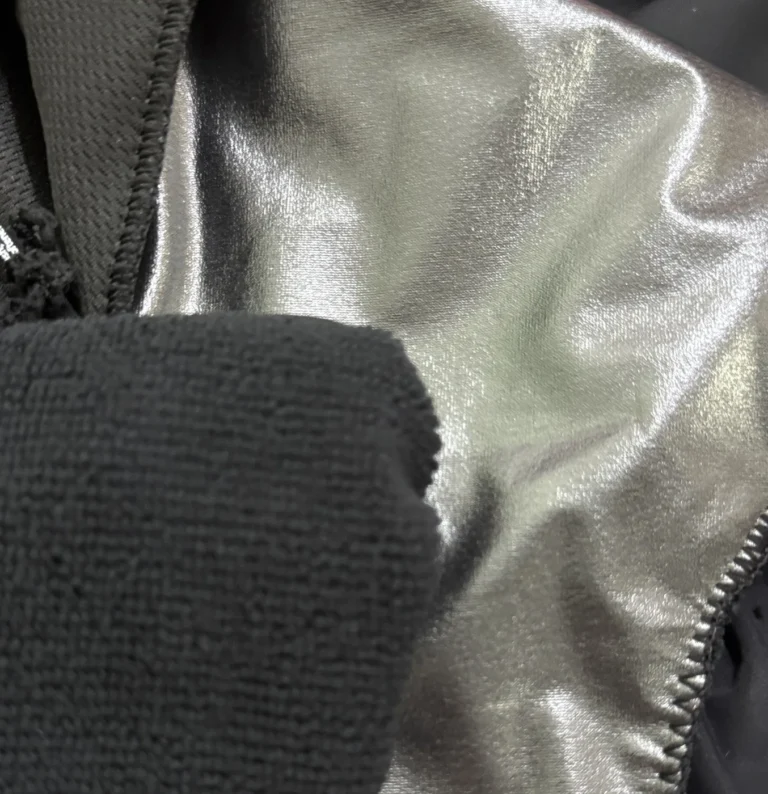
In one common construction approach, its functional components can be considered from the skin-facing side outward:
| Component | Role in the construction |
|---|---|
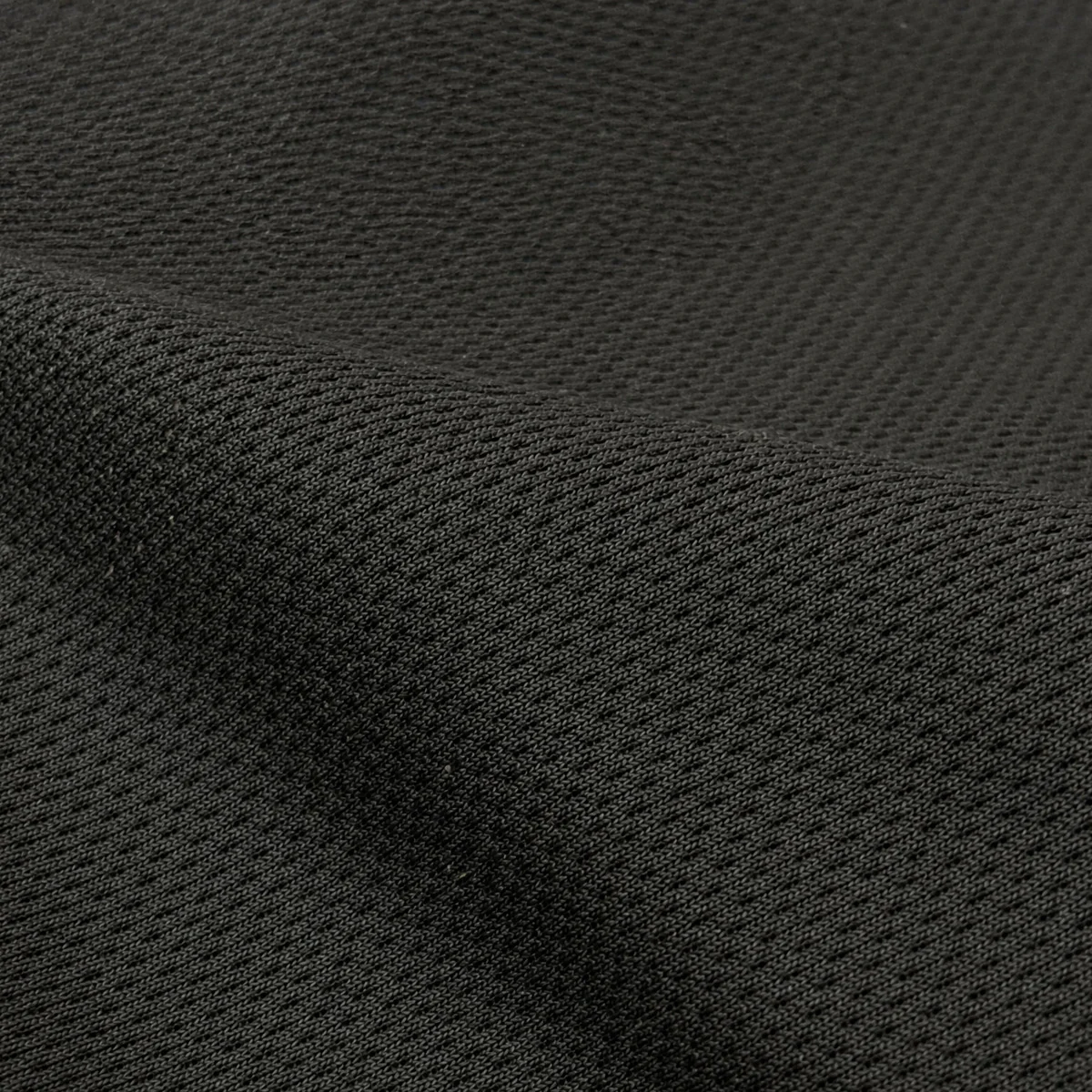
| Skin-facing mesh | Receives liquid at the contact surface and helps transfer it inward |
| Absorbent terry fabric | Provides the main absorbent material |
| TPU barrier | Helps limit moisture passing toward the outer garment |
| Nylon-spandex outer fabric | Forms the outer shell as part of the main underwear body |
This is an illustrative construction, not a fixed specification for every period underwear product.
Different designs may use different materials, layer arrangements or additional components according to the intended protection level and construction requirements.
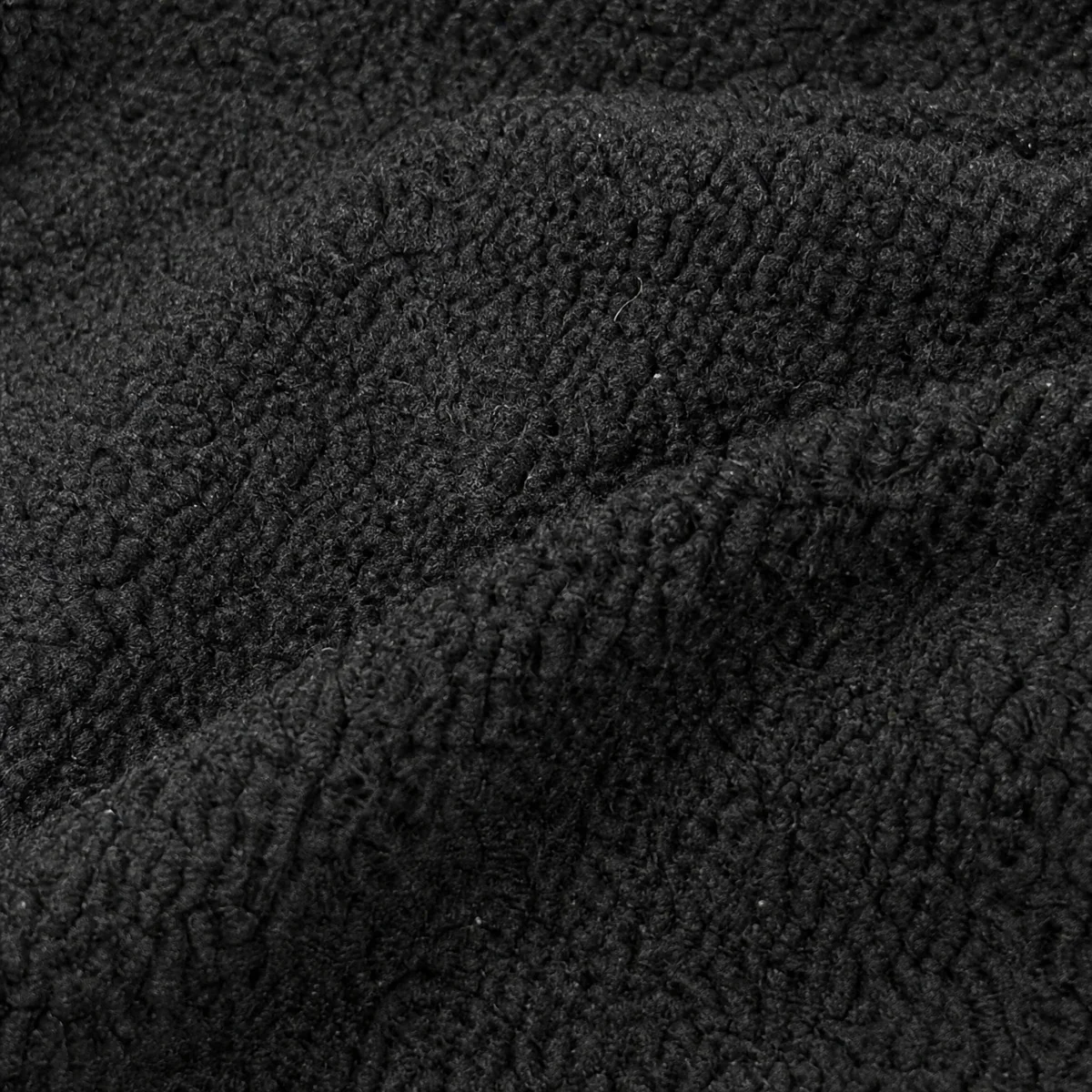
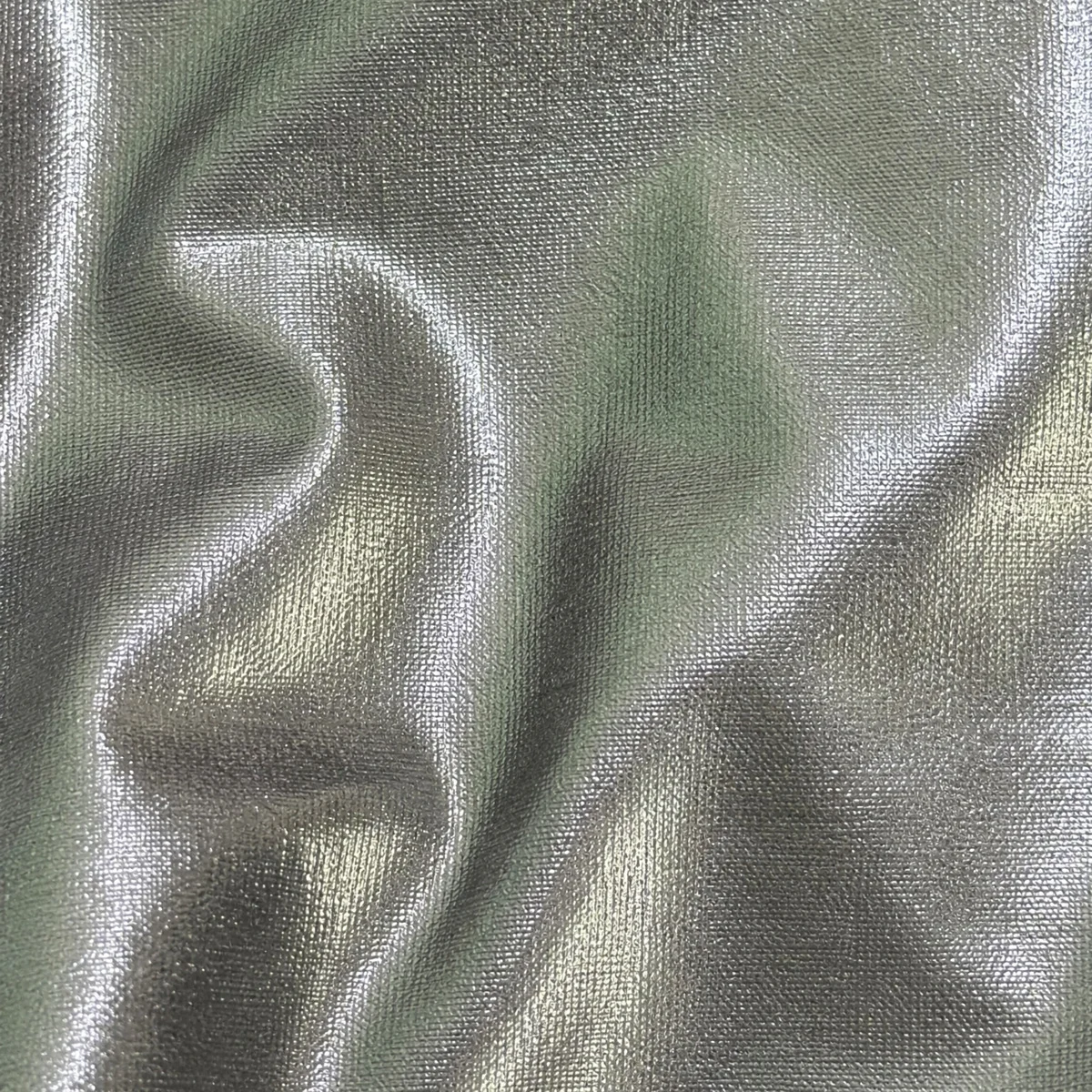
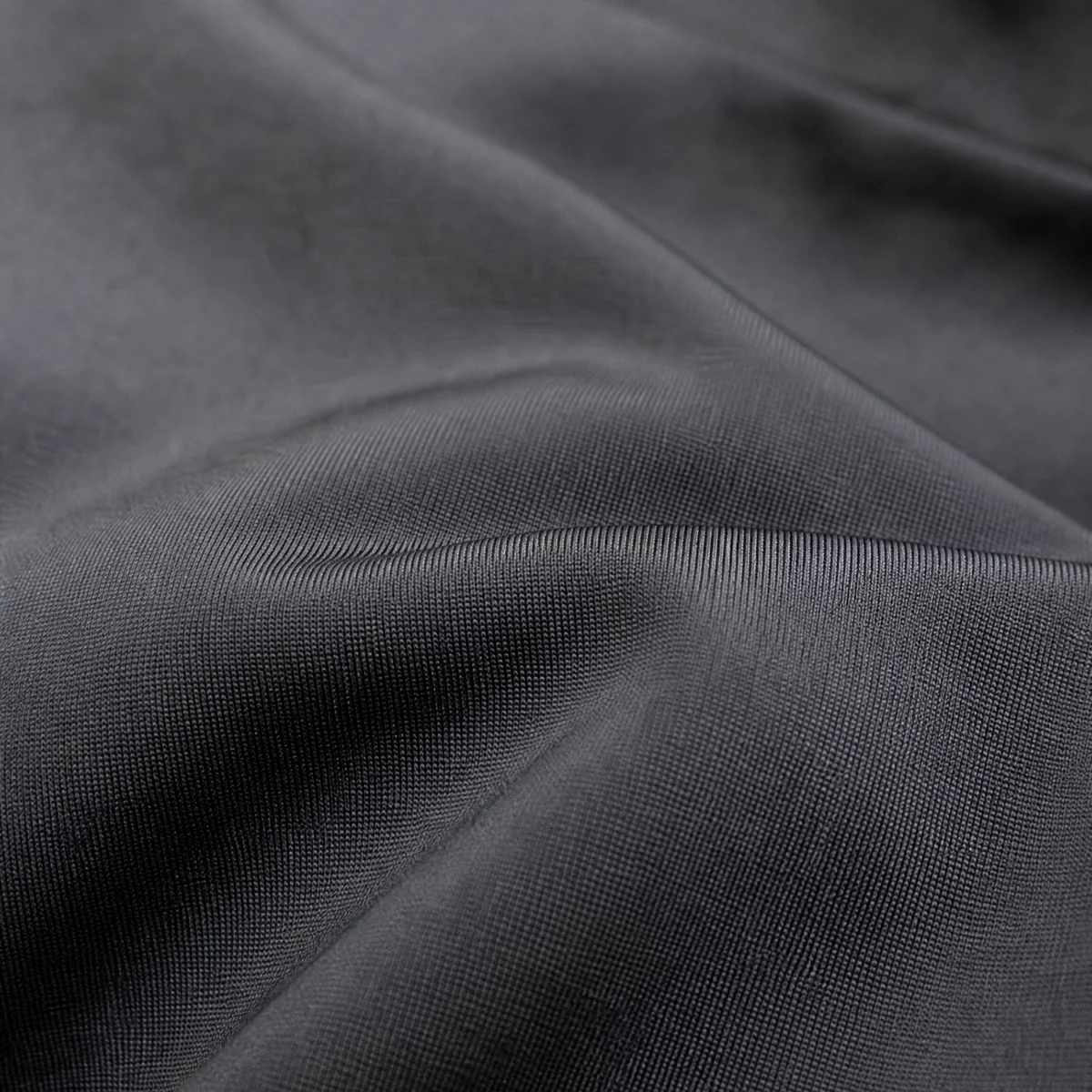
The important point is that a smoother or lighter body fabric does not, by itself, determine how the gusset performs.
Likewise, the absorbent system cannot be developed without considering how it fits into the finished garment.
A material combination that looks promising on a worktable still needs to be reviewed in the actual underwear construction.
For a closer look at this process, visit our Product Development page.
4. Seamless appearance, low bulk and protection must work together
Brands often use words such as seamless, invisible or no-show when describing the result they want.
Before sampling, it helps to clarify what those words mean for the particular product.
Does seamless refer to a knitted construction without certain seams? Does no-show mean a smoother leg opening with less visible marking under clothing? Or is the brand mainly concerned about the thickness and outline of the gusset?
These are different manufacturing questions.
A garment can have discreet outer edges while still having a noticeable absorbent area. A very smooth body fabric may feel excellent, but the finished product still depends on pattern proportions and how the gusset is attached.
This is why we believe fit and construction should be reviewed together.
Waist height, leg opening, gusset dimensions and fabric stretch can all influence the wearing experience.
And when a brand asks for more protection, it is important to consider how that requirement may affect thickness and flexibility.
The answer isn’t always to add another layer.
Sometimes the better development discussion is about material selection, absorbent-zone placement or how the existing construction can be adapted.
5. What should brands decide about absorbency before sampling?
Even when comfort and discretion are the main priorities, the protection requirement should not be left undefined.
A brand should at least explain the intended use.
Is this designed for lighter protection, heavier flow, overnight wear or another specific use case? Is a particular absorbency target essential to the product positioning? Are there test requirements for the intended market?
If the brand has a target capacity in milliliters, that can be included in the brief.
However, a number alone is not a complete performance specification.
The way a capacity is measured matters, as do liquid acquisition, retention, leakage resistance and the finished garment’s fit.
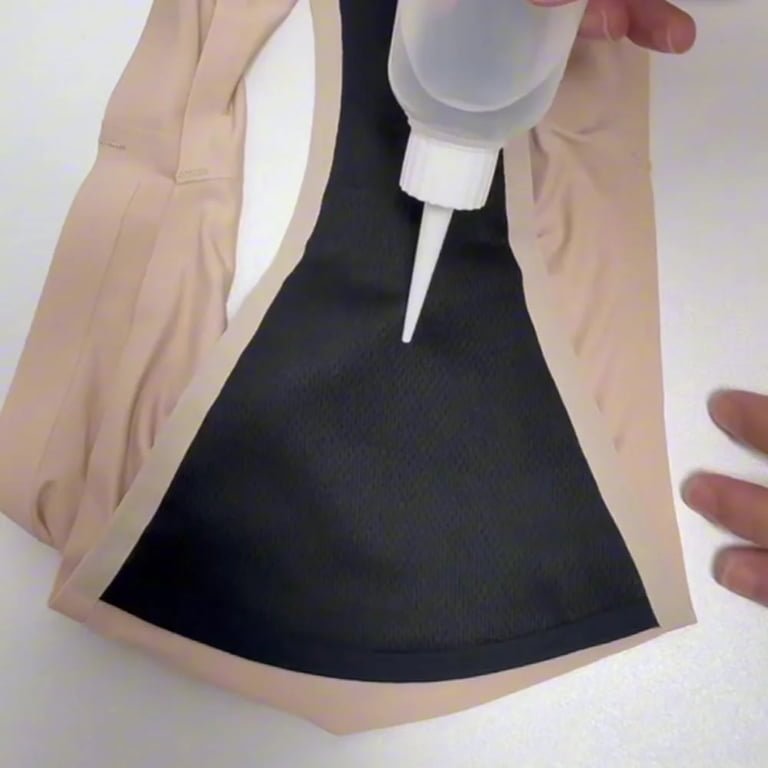
An in-house absorption demonstration can be useful during development to observe how liquid interacts with a proposed construction. It should not be confused with a standardized or independently certified test result.
Where a specific performance claim or independent report is required, the test method, conditions and acceptance criteria should be agreed before those results are promised.
You can read more about how we distinguish development checks, quality control and independent testing in Testing & Evidence.
For an early-stage brand, the practical starting point is simple: explain the protection you want the product to provide, even if you have not yet decided on every technical detail.
6. Existing style or fully custom development?
Not every period underwear project needs to begin with a completely new pattern and construction.
An existing style may be a useful starting point if its fit, materials and protection direction are already reasonably close to the brand’s requirements.
For example, a brand may want to review an existing garment and explore changes to the fabric, color, branding or packaging.
Other projects need more extensive development.
A different silhouette, a special fabric direction, changes to the gusset coverage or a new protection requirement may affect patterns, material sourcing, sampling and production feasibility.
Before sampling, it helps to distinguish between these two situations.
Existing-style adaptation may be a practical route when the requested changes are limited and compatible with an available product.
Fully custom development may be more appropriate when the product’s intended use, fit or construction differs substantially from available styles.
This distinction also matters commercially.
At YeegemCare, selected existing styles with logo customization can start from 1,000 pieces per style and color. Standard production is typically 2,000 pieces per style and color, with smaller pilot quantities discussed according to the project.
Custom fabrics, colors, construction and other requirements may influence the applicable MOQ and development process.
You can explore our Period Underwear OEM & ODM collection for potential starting styles.
You don’t have to arrive with a complete tech pack.
If you have one, that’s useful. If you have a reference sample, photographs or just a clear idea of the wearing experience, those can also provide a starting point.
The most helpful information usually falls into a few areas:
- Intended wearer and use: Who is the product for, and when will it be worn?
- Comfort and appearance: What should it feel like? What should be less visible or less bulky?
- Fabric and fit: Do you have a preferred material, silhouette, size range or reference style?
- Protection: What absorbency direction, coverage or performance requirements matter?
- Commercial context: What quantities, customization, branding and launch timing are you considering?
A manufacturer can use this information to discuss possible materials, construction options and the sampling pathway.
Some questions will only be answered after the first prototype is made.
That’s normal.
The purpose of the first sample is not to pretend every detail has already been solved. It’s to make the product direction tangible enough for both sides to review.
8. Before approving the sample for production
Once a sample is close to the intended result, approval should cover more than appearance.
The brand and manufacturing team should confirm the main fabric, gusset construction, fit, sizing, colors and branding details.
Any required testing or validation should be matched to the actual product specification. Washing and colorfastness requirements, for example, should be considered according to the materials and project conditions.
It is also important to document which materials and construction have been approved, especially when the brand plans to reorder.
A promising sample is the beginning of a repeatable production specification—not a substitute for one.
That preparation helps reduce uncertainty when the project moves from sampling to bulk manufacturing.
The best starting point is a conversation about your product
A brand doesn’t need to know exactly how many layers its period underwear should contain before approaching a manufacturer.
It does need to know what it is trying to create.
Maybe the priority is a smoother fabric, a less visible fit or a more comfortable product for movement. Perhaps it is extended coverage, a specific protection target or an entirely new style.
Those are all useful starting points.
At YeegemCare, our role is to help translate those requirements into practical material, fit, construction and sampling discussions.
Have a product idea, reference sample or tech pack?
Tell us what you want your period underwear to do, how you want it to feel and which market you are developing it for.