
When a brand is developing a period underwear collection, one of the first questions it asks a manufacturer is often: “How much liquid can this underwear absorb?”
It sounds straightforward. Yet two products described as having the same absorbency capacity may behave differently in use—or may have been evaluated by entirely different methods.
A sample might be tested as a flat absorbent material, while another is evaluated as a finished garment. The liquid used, the way it is applied, the pressure on the fabric and the definition of leakage can all affect the result.
For OEM and private-label buyers, an absorbency figure without defined test conditions is an incomplete performance claim. Knowing what was measured is just as important as knowing the number.
This guide explains the main performance questions brands should ask, the difference between in-house demonstrations and independent laboratory reports, and how to plan testing before approving samples or production.
1. What Does an Absorbency Number Actually Measure?
Start by asking what the number represents.
- Material capacity: How much liquid a particular absorbent component can hold under a defined procedure.
- Finished-garment performance: How a complete pair of underwear responds when liquid is introduced under specified conditions.
- Capacity before leakage: How much liquid the product manages before a predefined leakage criterion is reached.
These are related measurements, but they are not interchangeable.
A material may show promising capacity on a test bench yet perform differently after it is assembled into a garment. Gusset dimensions, stitching, fit, liquid transfer between layers and the waterproof barrier can influence the result.
Even two finished-garment tests may produce different values if their conditions differ. A meaningful supplier comparison therefore requires brands to ask:
“Is this a material-level result, a finished-product result, or a capacity-before-leakage result—and what procedure was used?”
A higher reported figure does not automatically mean stronger real-world protection.
2. Five Performance Areas Worth Evaluating
Absorption capacity before leakage
A useful evaluation should define how much liquid the product can manage before leakage occurs under agreed conditions. The setup should record the test liquid, application procedure, product position and leakage criteria.
A laboratory number is not automatically a promise of a certain number of hours of wear. Real-world flow patterns, movement and fit are variable.
Acquisition and wicking speed
Capacity alone does not tell a brand how quickly a garment receives liquid. During a sudden flow, the skin-facing surface must transfer liquid into the absorbent structure quickly enough to reduce pooling or movement toward the edges.
A high-capacity core can still be disappointing if liquid enters it too slowly for the intended use.
Retention and rewet
After liquid has been absorbed, how securely does the construction retain it? Rewet evaluation looks at moisture returning toward the skin-facing surface under a specified procedure, often involving pressure.
Two constructions with similar capacity may feel and perform differently when compressed. For brands concerned with comfort, retention and rewet deserve their own discussion.
Leakage and containment
Leakage resistance involves the whole garment. Absorbent-zone placement, gusset shape, seams, leg openings, fit and protective barrier construction all matter.
This is one reason flat-material testing should not be treated as a substitute for evaluating the finished garment where the product claim concerns protection in use.
Durability after washing
Reusable underwear is meant to perform through repeated laundering. A brand that plans to make a specific durability claim should define the wash procedure and evaluate the relevant properties after the agreed number of cycles.
For example, if a product is marketed with a 50-wash performance claim, that statement should be supported by evidence tied to the tested product, wash conditions and measured performance. It should not be assumed for every construction.
3. Why Finished-Garment Testing Matters
A period underwear gusset is a system, not a single fabric. Its components may include a skin-facing layer, liquid-transfer materials, an absorbent core, a moisture barrier and an outer fabric.
Material evaluations help development teams choose and compare fabrics. But once those fabrics are combined with stretch materials, seam construction and a shaped gusset, the finished garment has new variables.
A narrow-cut style, a higher-rise silhouette and an extended overnight protection zone do not necessarily behave identically, even when they share similar absorbent materials.
Brands should therefore distinguish testing individual materials to guide development from testing an assembled garment to assess a defined product claim.
Both have a place in an OEM/ODM project. They answer different questions.
4. In-House Demonstrations vs. Third-Party Laboratory Tests
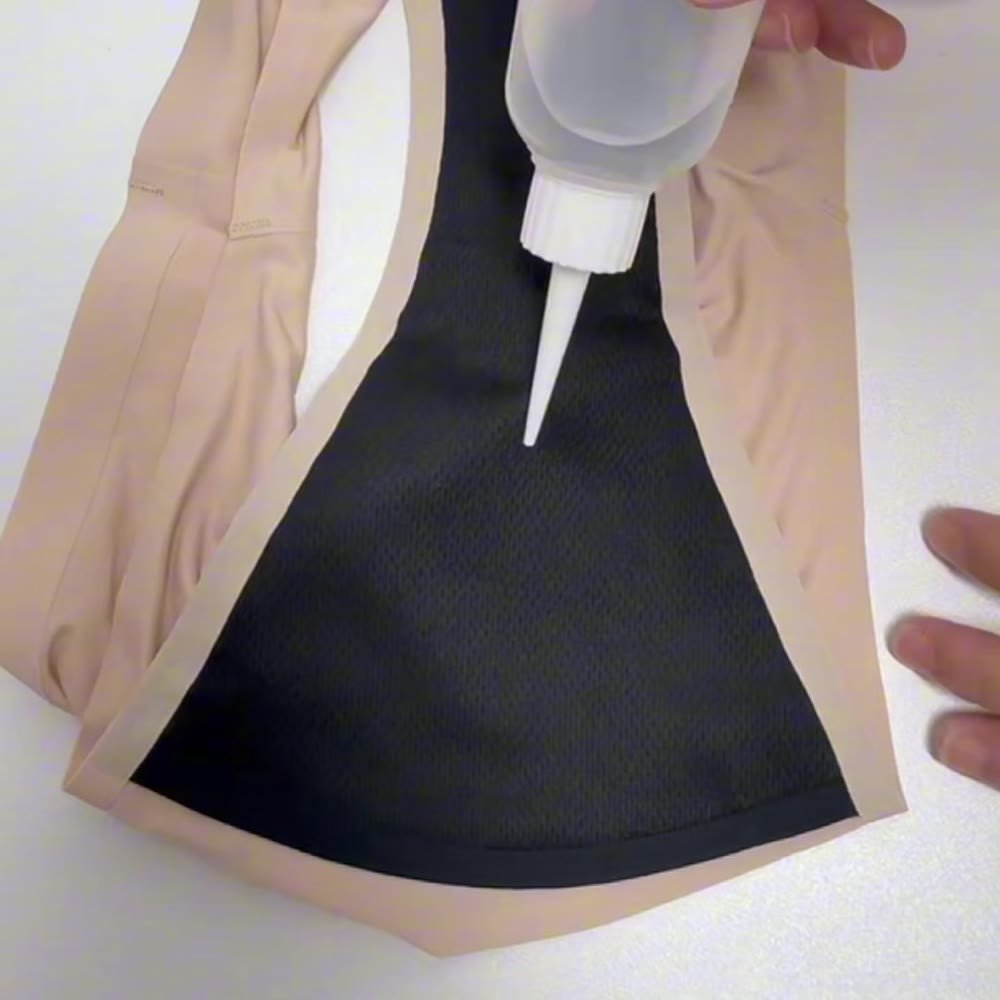
During sampling, a manufacturer may use an in-house liquid application demonstration to observe how a gusset accepts liquid or whether visible moisture reaches the outer layer under the demonstration conditions.
This can be useful for comparing prototype directions or discussing a design change. It is not, by itself, a standardized laboratory method or independent certification.
In-House Absorbency Demonstration
The video shows liquid application to an absorbent gusset followed by visual examination of the garment. It illustrates an internal development observation, not a standardized laboratory test. No certified absorption capacity, leakage rating or wash-durability result is implied.
An independent laboratory test serves another purpose: to evaluate the identified sample under a documented procedure and provide a report defining the tested characteristics, conditions and results.
For example, independent textile-testing organization Hohenstein describes a reusable period underwear test method developed with Femography by MAS. Its public description covers liquid absorption capacity, retention and absorption speed; durability can also be assessed according to the selected testing scope.
That is an illustration of the kinds of defined measurements available in the industry—not a claim that YeegemCare’s products have been tested or certified by Hohenstein.
When a brand requires independent evidence, the applicable laboratory, method, sample stage, claims and testing costs should be agreed for that project.
Performance evidence is not the same as material safety documentation
OEKO-TEX® STANDARD 100 documentation can be relevant to harmful-substance requirements within the scope of the certified materials or products. It does not, by itself, prove that a period underwear style meets a particular absorbency capacity or leak-protection rating.
Brands should review performance testing, chemical-safety documentation and destination-market requirements as separate but connected validation questions.
5. How to Read an Absorbency Test Report
A credible report should make the result understandable and traceable—not just present a headline number.
| What to check | What it tells the buyer |
|---|---|
| Sample identification | Which style, size, material construction and sample revision was tested |
| Test method | What was measured and how the result was obtained |
| Liquid and application | What liquid or simulant was used, and how it was introduced |
| Test conditions | Relevant timing, position, pressure and leakage criteria |
| Sample quantity | How many specimens were evaluated and how results varied |
| Wash history | Whether samples were new or tested after a defined laundering procedure |
| Results and units | Actual measurements, not only marketing descriptions |
| Testing organization | Whether the evidence comes from internal development work or an independent laboratory |
When comparing suppliers, ask whether the same method and criteria were used. If not, do not compare the numbers as though they were directly equivalent.
A report should also be linked to the production-approved specification. Results on an earlier or materially different prototype may not substantiate the finished product’s planned claim.
6. When Should Testing Enter the OEM Development Process?
Before sampling: define the performance target
Explain the intended wearer, product use, garment style and coverage requirements. Tell your manufacturer whether the product is intended as a lightweight everyday option, a higher-coverage style or another defined protection direction.
If the brand expects to publish a numerical claim, decide early how that claim will be measured and verified. This avoids developing a product around a figure that later proves difficult to substantiate.
During prototyping: use observations to guide decisions
In-house development evaluations can help compare fabric options and adjust construction. Record what was observed and the limits of the demonstration. Do not present directional results as independently verified commercial claims.
Before production approval: validate the agreed construction
Confirm whether additional independent or buyer-specific testing is required. Match the sample being evaluated to the materials, fit and protection-zone specification intended for production.
Changes to functional layers or garment construction may require the parties to reconsider whether the earlier evidence still applies.
During production: keep the approved specification consistent
Validation does not replace production quality control. Materials, dimensions, workmanship and relevant process checks should remain aligned with the approved specification and the agreed quality plan.
For a broader look at the development journey before testing begins, see our first article: Custom Period Underwear Manufacturing: What Brands Should Consider Before Sampling.
7. Questions to Ask Your Period Underwear Manufacturer
Can you provide an absorbency number?
Ask which product or material was tested, which method was used, and whether the result comes from internal evaluation or a third-party report.
Does a higher mL value always mean a better product?
No. Capacity must be considered alongside acquisition speed, retention, containment, coverage and fit under the intended conditions.
Can a factory demonstration replace a laboratory report?
Not when independent evidence is required. A development video can illustrate a process but does not automatically validate a numerical performance claim.
Do we need to test every size?
The appropriate sizes and sample plan depend on the method, garment construction and brand claim. Changes in fit and protection coverage may be relevant.
What about washing?
Agree on wash conditions and any durability targets before making repeated-use performance claims. Test evidence should support the specific statement the brand intends to make.
Who pays for independent testing?
Clarify the laboratory, method, scope, report ownership, timing and cost responsibilities before requesting samples or starting validation.
8. How YeegemCare Approaches Absorbency Evaluation
YeegemCare separates four types of evidence according to the product and stage of development:
- In-house development evaluation: Observations used to compare materials and prototypes; not independent certification.
- Internal quality control: Checks against approved project specifications and applicable workmanship or process requirements.
- Third-party laboratory testing: Testing that can be arranged when required, with the laboratory, method, scope and associated costs confirmed for the project.
- Buyer-specific validation: Additional checks planned around the brand’s intended market, use conditions and acceptance criteria.
We do not assign a single capacity claim to all garments or present an in-house demonstration as third-party certification.
Our Testing & Evidence page explains the evidence framework. Our Product Development page outlines how an initial brief moves through materials, prototyping, validation and production approval.
If you are comparing styles, explore our period underwear manufacturing and private-label options.
Better Product Decisions Start with Better Test Questions
Instead of asking only, “How many milliliters can this underwear absorb?”, ask:
“What does our product need to do, under which conditions, and how will we verify it?”
That leads to clearer development briefs, more meaningful supplier comparisons and evidence that better matches the finished product.
Planning a custom period underwear collection? Share your intended protection level, target market, style direction and any required testing criteria. We can discuss a practical development and validation starting point.