Testing & Evidence
A clear validation framework for buyer review.
YeegemCare separates development evaluation, internal quality control, third-party laboratory testing and buyer-specific validation so each project can define the right evidence before production.
Four levels of review
Know what each type of evidence means.
The appropriate path depends on the product, construction, target market, buyer requirements and agreed test scope. Results and documents are never presented outside their actual scope.
In-house Development Evaluation
Early material, construction, fit and prototype observations used to guide product development. These evaluations support design decisions and are not independent certification.
Internal Quality Control
Project controls may include checks against the approved specification, workmanship review and in-process or final inspection as appropriate to the product and order. Internal wash and colorfastness checks are carried out during development and quality control as appropriate. Test conditions are defined according to the project and material.
Third-party Laboratory Testing
Third-party testing or inspection can be arranged when required by the buyer, with the related third-party costs generally borne by the buyer. Where laboratory testing is required, test methods, sample stage, laboratory and report scope are confirmed for the project.
Buyer-specific Validation
Buyer-defined validation can be planned around agreed use conditions, methods and acceptance criteria. Requirements should be shared before sampling so development and evidence remain aligned.
Used during development to observe liquid acquisition, retention and whether moisture reaches the outer layer under the demonstration conditions. No standardized test method, independent test result or certified performance is implied.
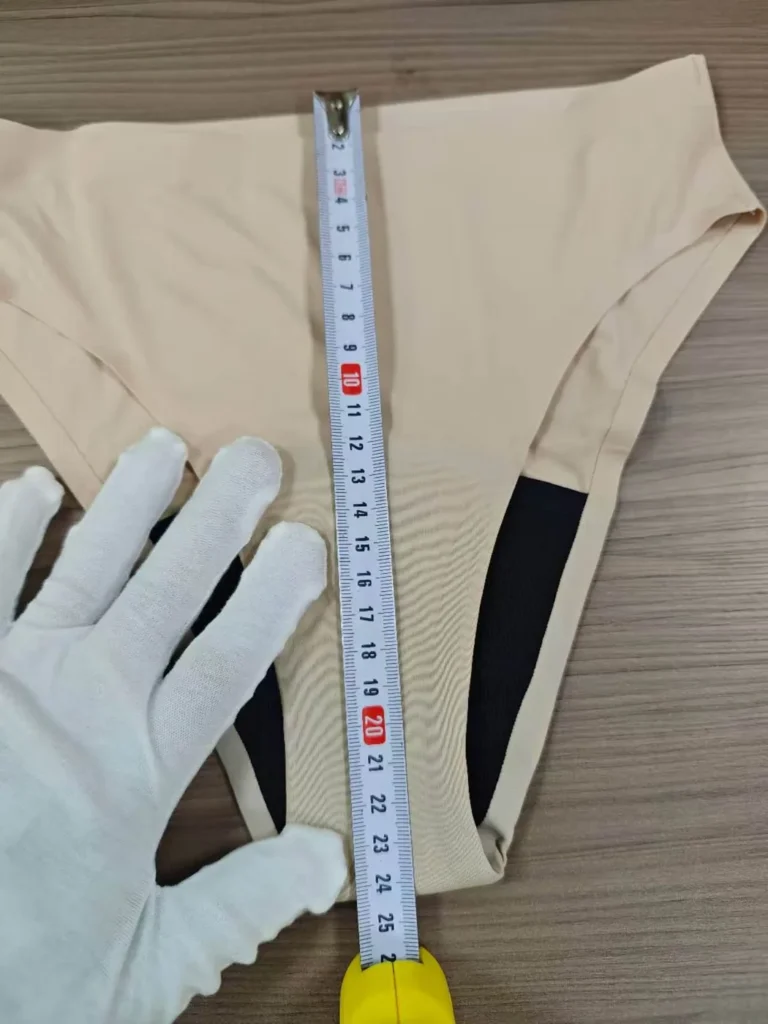
Final dimensional inspection before shipment.
Buyer-specific validation plan
Define the questions before selecting the test.
According to product construction and project requirements, a validation plan may evaluate:
- Absorbency or acquisition direction
- Rewet performance
- Leakage or waterproofing
- Wash durability
- Odor-management materials or finishing options
- Other buyer-defined performance priorities
No fixed performance result is implied here. Methods, conditions, laboratories, sample stage and acceptance criteria are confirmed case by case.
Testing and compliance
Related, but not interchangeable.
Testing
Testing evaluates a defined product, material or construction against a selected method and scope. A result only applies to the item and conditions actually tested.
Compliance
Compliance concerns applicable standards, regulatory requirements and documentation. Requirements vary by market, product category, claim and project scope and must be confirmed accordingly.
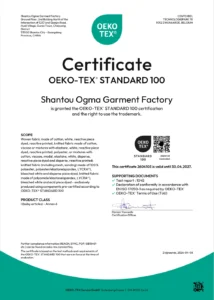
OEKO-TEX documentation available for applicable certified material scopes. View original certificate
Evidence access
Match documentation access to its purpose.
Public Information
General development and quality-framework information appropriate for public buyer review.
Available Upon Request
Relevant supporting documents may be reviewed where available and appropriate to the inquiry.
Project-specific / NDA
Buyer-specific specifications, reports and validation records may require project confirmation or confidentiality controls.
Plan the evidence path
Tell us what your market and project need to validate.
Share the product category, target use, destination market and evidence priorities. We will help identify a practical development and validation starting point.